Customer Service
Telefon: +44 20 7183 8739
Program: Mon–Fri, 9:00–17:00
Email: office@zylarisgroup.com

Your website gets traffic but no leads? The problem isn’t traffic—it’s what happens after. Here’s why visitors don’t convert and how to fix it.
Your website gets traffic, but no leads.
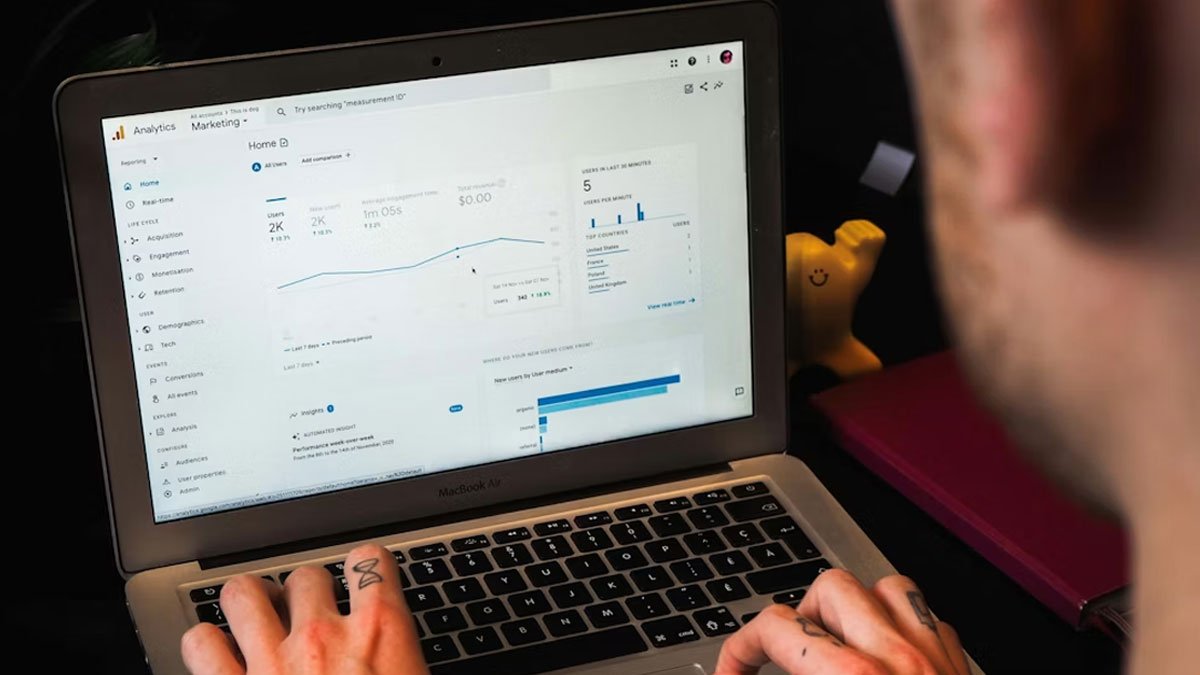
You check analytics and see visitors coming in. Pages are being viewed. Some users even spend time on the site.
From the outside, it looks like things are working.
But there are no enquiries. No calls. No consistent flow of opportunities.
At that point, it stops making sense.
Because if people are visiting your website, why aren’t they taking action?
Most business owners assume that traffic should naturally turn into leads.
If people visit the website, some of them should convert. That feels logical.
But traffic on its own does nothing.
It only creates the possibility of conversion.
What actually determines results is what happens during and after the visit. How clearly the message is communicated, how the user is guided, and how the business handles the interaction.
Without structure, traffic becomes noise.
And that is exactly what happens in most SMEs.
When you look beyond the numbers, the behaviour becomes clear.
A visitor lands on your website, usually from a search or a referral. They try to understand what you do and whether it’s relevant to them.
If the message is not immediately clear, they leave.
If they stay, they start exploring. They click through pages, scan content, and look for something that helps them decide.
This is where things break.
The website does not guide them. It presents information, but it does not lead them toward a clear next step. There is no strong direction, no structured path, no sense of progression.
So the visitor does what most people do when there is uncertainty.
They leave.
Even when someone is interested, hesitation takes over. They are not convinced enough to take action, or they are not shown how to do it clearly.
That hesitation is where most opportunities disappear.
The issue is rarely one single problem. It is usually a combination of structural gaps.
In many businesses, the website tries to speak to everyone. The message becomes vague, and the visitor cannot quickly recognise that the solution is meant for them.
At the same time, calls to action are weak or unclear. The website might say “contact us,” but it does not create a reason to act now.
The flow between pages lacks intention. Instead of guiding the visitor, the website leaves them to figure things out on their own.
And even when someone decides to reach out, the process feels slow or uncertain. Forms are long, responses are delayed, and the experience does not build confidence.
None of these issues are dramatic on their own.
But together, they create friction.
And friction kills conversion.
This is where many businesses go in the wrong direction.
They see low conversions and assume they need more traffic.
So they invest in SEO, ads, or social media to bring more people to the website.
Traffic increases, but enquiries don’t.
Because the underlying issue remains.
More traffic does not fix a broken flow. It only sends more people into it.
This is why some businesses generate thousands of visitors and still struggle to get leads.
They are optimising the wrong part of the system.
Instead of asking:
“How do I get more traffic?”
You need to ask:
“What happens to the traffic I already have?”
Because the answer to that question reveals everything.
If visitors are not converting, the issue sits in how your website communicates, guides, and connects to the rest of your business.
This is not a traffic problem.
It is a system problem.
A high-performing business website does not leave things to chance.
It communicates clearly from the first moment. The visitor understands exactly what the business does and who it is for.
It guides the user. Each page leads naturally to the next step. There is no confusion about what to do.
It creates urgency. The visitor feels a reason to act now, not later.
It responds quickly. When someone takes action, the system captures that enquiry and moves it forward immediately.
Behind the scenes, everything is structured. The business knows where traffic comes from, what converts, and where improvements are needed.
This is what turns traffic into leads.
When a website gets traffic but no enquiries, the problem usually sits in three areas.
Clarity is the first. If your message is not sharp, visitors cannot recognise value quickly enough.
Flow is the second. If your website does not guide users, they will not take action.
Structure is the third. If your business does not handle enquiries properly, leads will be lost even when interest exists.
These are not isolated issues.
They are connected.
And they all point to the same thing.
A weak digital foundation.
Fixing this does not start with more traffic or a complete redesign.
It starts with understanding how your website currently behaves.
Follow the journey of a real visitor. Look at how they arrive, what they see, what they do, and where they leave. This reveals where the friction is.
Then, improve clarity. Make your message specific. Speak directly to the right audience.
Next, improve flow. Guide visitors toward a clear action. Remove hesitation and make the next step obvious.
Finally, fix what happens after the action. Ensure that enquiries are captured, processed, and followed up quickly and consistently.
These changes do not require complexity.
They require structure.
When the structure is right, traffic starts to behave differently.
Visitors stay longer because they understand what they are looking at.
More people take action because the path is clear.
Enquiries are handled faster, which increases conversion.
You start to see patterns. You understand what works and what doesn’t.
The website becomes predictable.
Not perfect, but reliable.
And that changes how the business grows.
If your website gets traffic but no leads, adding more traffic will not solve the problem.
You need to understand what is happening inside your current system.
A Digital Foundation Audit gives you a clear view of how your website, your messaging, and your processes work together—and where they break down.
From there, the solution becomes obvious.
If you prefer a direct conversation, a discovery call allows us to go through your setup and identify what needs to change.
No assumptions. No guesswork.
Just clarity.