
/* ================================ FOOTER MOBILE - ZYLARIS ================================ */ /* Container Footer */ .footer-mobile { background-color: #1a1a1a; padding: 20px; color: #ffffff; border-radius: 10px; } /* Secțiunea Customer Service */ .footer-mobile .footer-container { display: flex; flex-direction: column; gap: 12px; } /* Titlu Section */ .footer-mobile .footer-container .footer-contact h3 { font-size: 18px; font-weight: bold; color: #ffffff; margin-bottom: 10px; } /* Detalii contact */ .footer-mobile .footer-container .footer-contact p { font-size: 14px; margin: 5px 0; color: #d1d1d1; } /* Linkuri */ .footer-mobile .footer-container .footer-contact a { font-size: 14px; color: #5BAD45; /* Verde Zylaris */ text-decoration: none; transition: color 0.2s ease; } .footer-mobile .footer-container .footer-contact a:hover { color: #ffffff; } /* Buton Contactează-ne */ .footer-mobile .footer-container .footer-cta a { display: inline-block; background-color: #5BAD45; padding: 8px 16px; color: #ffffff; font-size: 14px; font-weight: bold; border-radius: 5px; text-decoration: none; transition: background-color 0.3s ease; margin-top: 10px; } .footer-mobile .footer-container .footer-cta a:hover { background-color: #4a9437; }
Generative Engine Optimization (GEO): The Future of Digital Visibility for SMEs
Traditional SEO is no longer enough. Businesses are entering a new era where AI systems like ChatGPT, Gemini, Claude, and Google AI Overviews increasingly decide which companies get visibility. This shift is creating a major opportunity for SMEs that understand Generative Engine Optimization (GEO). In this guide, we explain how GEO works, why digital infrastructure matters, how authority content influences AI search, and what businesses must do to remain discoverable in the future of online visibility.


Why Traditional SEO Alone Is No Longer Enough
For years, businesses competed for visibility inside traditional search engines.
The strategy was simple.
Rank on Google. Generate clicks. Convert traffic.
That model is now changing rapidly.
Search behaviour is evolving from:
- typing keywords,
to: - asking AI systems direct business questions.
Business owners are increasingly using platforms like ChatGPT, Gemini, Claude, Perplexity, and Google AI Overviews to ask questions such as:
- “Why is my website not generating leads?”
- “Best digital infrastructure for small business”
- “How do I automate my business operations?”
- “What systems does an ecommerce business need?”
- “How do I improve website conversion rates?”
This shift changes how businesses become visible online.
The future is no longer only about ranking pages.
It is about becoming the trusted source AI systems reference, summarise, recommend, and quote.
This is where Generative Engine Optimization (GEO) becomes critical.
At Zylaris, we believe GEO represents the next evolution of digital visibility for SMEs.
Not just more traffic.
Authority.
Trust.
Infrastructure.
And long-term discoverability.
What Is Generative Engine Optimization (GEO)?
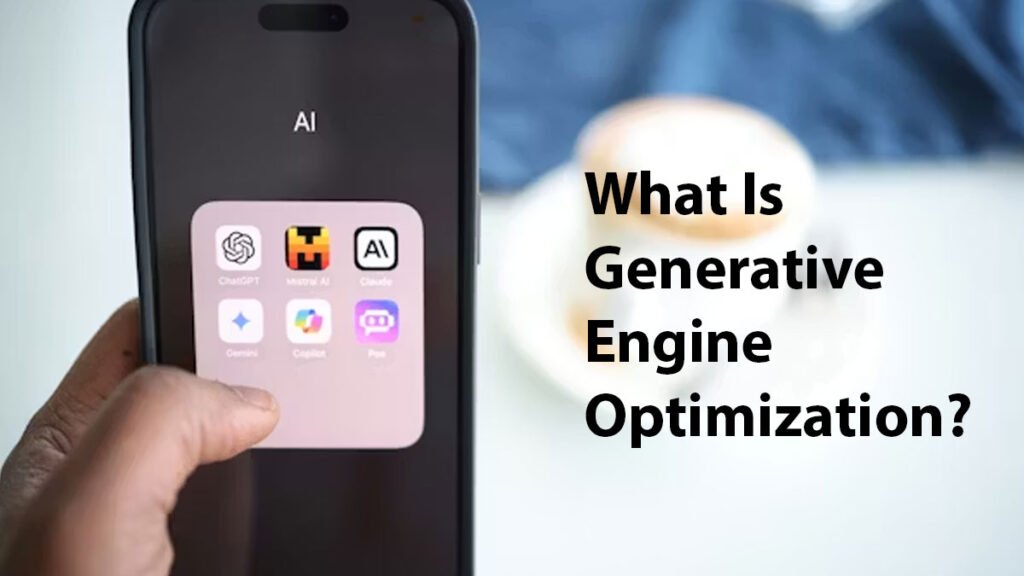
Generative Engine Optimization (GEO) is the process of structuring content, systems, authority, and digital signals so AI-powered search engines can:
- Understand your business
- Trust your expertise
- Summarise your content accurately
- Recommend your company in AI-generated answers
- Associate your brand with specific business problems
Traditional SEO focuses heavily on ranking pages.
GEO focuses on becoming part of the AI answer layer itself.
That difference is massive.
When someone searches traditionally, they choose from multiple links.
When someone asks AI a direct question, the AI increasingly chooses which businesses, frameworks, explanations, and sources deserve visibility.
This creates a new competitive environment.
And most SMEs are completely unprepared for it.
Why GEO Matters for Small Businesses
Large corporations already dominate traditional search through massive authority, backlinks, and advertising budgets.
But GEO creates a different opportunity.
AI systems increasingly reward:
- clarity,
- practical expertise,
- structured knowledge,
- problem-solving authority,
- topical depth,
- and real-world usefulness.
This gives SMEs an opportunity to compete through expertise instead of advertising scale.
The businesses that explain problems best will increasingly dominate visibility.
Not necessarily the biggest brands.
This is especially important for:
- ecommerce businesses,
- service businesses,
- consultants,
- local SMEs,
- operational service providers,
- and digital infrastructure companies.
The Shift From SEO to GEO
Traditional SEO was heavily influenced by:
- keywords,
- backlinks,
- technical optimisation,
- and ranking signals.
Those factors still matter.
But GEO introduces additional layers.
AI systems now analyse:
- topical authority,
- content structure,
- contextual relationships,
- semantic relevance,
- user intent,
- consistency,
- expertise depth,
- and answer quality.
This changes how content should be created.
Thin articles written only for search rankings are becoming weaker.
Deep authority content is becoming stronger.
This is why long-form pillar articles are now extremely valuable.
Not because they are long.
Because they create knowledge depth.
Why Most Businesses Will Struggle With GEO
Most businesses still approach content incorrectly.
They publish:
- generic blogs,
- recycled advice,
- surface-level SEO pages,
- and keyword-stuffed articles.
AI systems are becoming better at recognising shallow content.
The businesses that will dominate GEO are the ones that:
- explain real business problems,
- provide structured thinking,
- connect systems together,
- demonstrate expertise,
- and consistently educate their market.
This is where Zylaris positioning becomes powerful.
We are not positioning as:
- “web designers”
- “marketing agencies”
- or “tech companies.”
We position around:
- Digital Infrastructure for Business
- Business Systems
- Operational Visibility
- Revenue Systems
- Automation
- Connected Growth
That positioning naturally aligns with GEO.
Because it is built around solving business problems structurally.
GEO vs Traditional SEO
Traditional SEO Focus:
- Ranking pages
- Keywords
- Click-through rates
- Backlinks
- Search snippets
GEO Focus:
- AI discoverability
- Semantic understanding
- Topic ownership
- Authority positioning
- Structured expertise
- Answer relevance
- AI summarisation
Traditional SEO asks:
“How do we rank?”
GEO asks:
“How do we become the trusted answer?”
That is a strategic difference.
The Core GEO Framework for SMEs
At Zylaris, we see GEO operating across four major layers.
1. Authority Layer
AI systems need confidence signals.
Businesses that publish weak, inconsistent, or shallow content will struggle.
Authority comes from:
- expertise,
- consistency,
- depth,
- and problem-solving clarity.
This means businesses must create:
- pillar articles,
- educational content,
- frameworks,
- FAQs,
- use-case explanations,
- and strategic insights.
One short article is no longer enough.
The goal is to own a topic cluster completely.
2. Structure Layer
AI systems understand structured content better.
This means:
- strong headings,
- clear sections,
- logical flow,
- FAQs,
- semantic clarity,
- and topic relationships matter enormously.
Messy content becomes difficult for AI systems to interpret accurately.
Clear structure improves:
- indexing,
- summarisation,
- and discoverability.
This is why pillar content performs well.
It provides comprehensive contextual understanding.
3. Trust Layer
AI systems increasingly prioritise trustworthy signals.
This includes:
- consistent branding,
- expertise-based content,
- business legitimacy,
- topic consistency,
- and useful explanations.
Businesses that constantly chase trends without clear positioning weaken trust.
Strong GEO businesses become associated with specific problem categories.
For example:
- Digital Infrastructure for Business
- Ecommerce Infrastructure
- Business Automation Systems
- Revenue Operations
- Operational Efficiency
4. Infrastructure Layer
This is the most overlooked part.
Your digital systems affect visibility.
Disconnected businesses create fragmented digital signals.
Your:
- website,
- CRM,
- analytics,
- structured data,
- automation,
- customer systems,
- content architecture,
- and internal linking
all influence how discoverable and understandable your business becomes.
This is why GEO is not just content marketing.
It is digital infrastructure.
Why Long-Form Pillar Articles Matter
AI systems prefer comprehensive contextual understanding.
A 300-word article usually lacks enough depth to establish authority.
A properly structured 3,000-word authority article can:
- own an entire keyword cluster,
- answer multiple intent variations,
- rank for long-tail searches,
- feed AI summarisation,
- support internal linking,
- and establish expertise signals.
For example, one article around:
“Why Your Ecommerce Store Is Not Generating Sales”
can rank for:
- ecommerce conversion problems
- website not converting
- ecommerce infrastructure
- ecommerce system
- improve ecommerce sales
- ecommerce automation
- ecommerce lead generation
- digital infrastructure for ecommerce
This is how topical dominance is built.
GEO and Ecommerce Businesses
Ecommerce is one of the industries most affected by GEO.
Customers increasingly ask AI systems:
- “What is the best ecommerce platform?”
- “Why is my store not converting?”
- “How do I improve ecommerce operations?”
- “How do I automate ecommerce fulfilment?”
- “What systems should an ecommerce business use?”
Businesses that answer these questions deeply and practically will dominate future visibility.
Not businesses publishing generic product descriptions.
This creates massive opportunities for ecommerce infrastructure positioning.
The GEO Content Structure That Works
Most GEO-friendly authority articles follow a strong structure:
1. Problem Identification
Clearly explain the business problem.
2. Perspective Shift
Reframe the issue strategically.
3. System Explanation
Explain the underlying operational problem.
4. Framework or Process
Provide structure and clarity.
5. Real-World Scenarios
Show practical business examples.
6. FAQs
Answer high-intent search questions.
7. Internal Linking
Connect readers toward service pages naturally.
8. Calm CTA
Offer the next logical step.
This structure works well because it aligns with both:
- human understanding,
- and AI interpretation.
Why Internal Linking Matters More in GEO
Most businesses underestimate internal linking.
Internal linking helps:
- search engines,
- AI systems,
- and users
understand topic relationships.
For example:
A GEO article should naturally link toward:
- Digital Infrastructure Services
- Ecommerce Infrastructure
- Website Systems
- CRM Integration
- Automation Services
- Revenue Systems
- Digital Foundation Audits
This creates semantic relationships across the website.
Over time, the business becomes associated with those topics more strongly.
GEO Is Changing Local Business Visibility Too
This shift is not only affecting global businesses.
Local SMEs will increasingly compete inside AI-generated local recommendations.
Questions like:
- “Best website company for small business”
- “Who can improve my business systems?”
- “Best ecommerce consultant near me”
- “How do I automate my small business?”
will increasingly produce AI-generated answers instead of traditional search listings.
Businesses with:
- clear positioning,
- strong authority content,
- structured expertise,
- and connected infrastructure
will dominate these results.
The Biggest GEO Mistake Businesses Make
Most businesses still create content around:
“What we do.”
Strong GEO content focuses on:
“What problem we solve.”
That difference changes:
- discoverability,
- authority,
- conversion,
- and AI understanding.
Businesses that explain problems clearly become more valuable to both:
- customers,
- and AI systems.
The Future of Search Is Contextual
Search is moving away from:
- isolated keywords,
toward: - contextual understanding.
AI systems increasingly understand:
- relationships,
- business intent,
- operational challenges,
- and expertise depth.
This means businesses must think beyond isolated SEO pages.
The future belongs to:
- topic ecosystems,
- authority clusters,
- and infrastructure-driven content.
GEO + Digital Infrastructure = Long-Term Visibility
At Zylaris, we believe GEO and Digital Infrastructure are deeply connected.
Because discoverability itself is becoming infrastructural.
Businesses need:
- connected systems,
- structured knowledge,
- operational clarity,
- and authority ecosystems.
Not random marketing tactics.
The companies that win over the next decade will not necessarily be the loudest.
They will be the clearest.
The most useful.
The most structurally intelligent.
And the most trusted.
Frequently Asked Questions
What is Generative Engine Optimization (GEO)?
GEO is the process of optimising content and digital infrastructure so AI-powered search engines can understand, summarise, trust, and recommend your business.
Is GEO replacing SEO?
No.
SEO still matters.
GEO builds on top of SEO by adapting visibility strategies for AI-powered search experiences.
Why are long-form authority articles important for GEO?
They provide contextual depth, semantic relevance, topical authority, and structured expertise that AI systems can interpret more effectively.
How does GEO help SMEs?
GEO allows SMEs to compete through expertise and problem-solving clarity rather than relying only on advertising budgets or domain authority.
What industries benefit most from GEO?
Industries with complex buying decisions benefit heavily, including:
- ecommerce,
- consulting,
- digital infrastructure,
- automation,
- SaaS,
- operations,
- and professional services.
What is the relationship between GEO and Digital Infrastructure?
Strong GEO depends on connected systems, structured content architecture, operational clarity, and digital consistency across the business.
Final Thoughts
The internet is entering a new visibility era.
Businesses are no longer competing only for rankings.
They are competing to become trusted answers.
This changes everything.
Shallow SEO strategies will continue weakening.
Authority ecosystems will become stronger.
Businesses that clearly explain problems, structure knowledge properly, and build connected digital infrastructure will increasingly dominate both:
- traditional search,
- and AI-generated discovery.
At Zylaris, we help SMEs build the digital infrastructure required for visibility, operations, automation, and scalable growth.
Because the future of online growth is no longer just about websites.
It is about systems.
And the businesses that understand this early will gain a major advantage.